
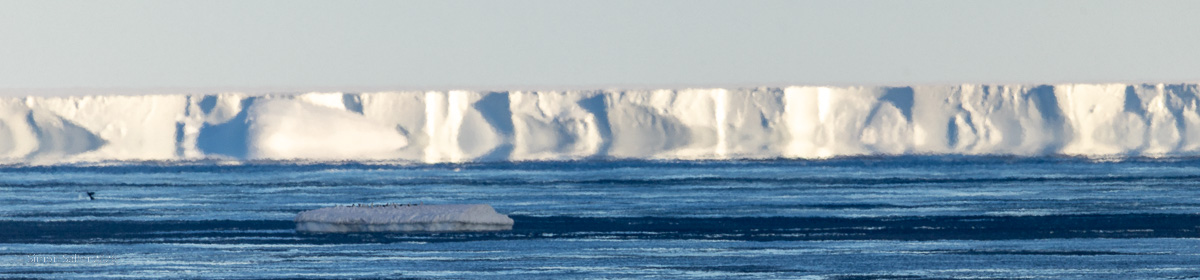
After another day at sea, we arrived at Marguerite Bay off the west coast of Graham Land. The sea day had been quiet and pleasant. Sunshine and a gentle swell. We particularly enjoyed eating dinner while watching albatross and ice bergs float past. I also spent some time on the back deck photographing sooty albatross.


At the north end of Marguerite Bay is Stonington Island. It is only small. 25 m high in the centre. The island is right at the snout of Northeast Glacier and used to be connected to it by a snow slope. The British and Americans had bases here in the 1940s. The British base was used up until 1975. Both bases are now designated as historical monuments. Sir Vivien Fuchs wintered here in 1948 and again the next year when the relief ship failed to arrive. He later went on to lead the first trans-Antarctic expedition and became director of the British Antarctic Survey until 1973. He was a newspaper headline writers dream. For example, in describing a two day sledging trip the headline might read “Sir Vivien Fuchs off for the weekend”.


We had an easy landing by zodiac on Stonington Island. The weather was warm and sunny. The scenery spectacular. Whoever first chose Stonington as a site for a base chose well. To the north is the massive ice wall of the end of Northeast Glacier. This creaks and groans as the ice shifts and occasionally bits fall off into the water. South and west is Marguerite bay filled with icebergs and framed by mountains. Due east is the Bellinghausen Sea. Open ocean clogged with ice. To the west, the mountains rise towards the centre of the Antarctic Peninsula. I have no doubt that, back in the day, many hours were spent in contemplation of this magnificent vista, pipe in one hand and hot cocoa in the other.


Our first stop was to look at some Imperial Shags. The difference between cormorants and shags is elusive. Often there is a difference. A certain type of birder will rattle on for ages describing them. However, there is no consistent scientific distinction between the two although they generally refer to different species within the same family. English-speaking sailors originally assigned the names somewhat haphazardly. A lot depends on where you are or who you ask. Imperial Shags are also known as Blue-eyed Cormorants. The cormorants are described as “possessing a distinctive ring of blue skin around its eyes, a orange-yellow nasal knob, pinkish legs and feet, and an erectile black crest”. Sadly, it was not breeding season so no erectile crests to be seen.


We wandered around the beach past the remains of two tracked vehicles and a sleeping seal. We visited the huts. There was not very much going on in either of them. As is often the case with museum type scenarios, I find the stories fascinating but the empty, wooden buildings less so. On the way back to the ship, we came across some moulting Adelie penguins. They typically look a bit sad and fed up while they are waiting for their new coats to grow. They can also appear a little comical. I very much liked punk penguin with the erectile Mohican hair piece.


Back on the ship, things got silly. It was time for the polar plunge. People jumping into he freezing cold water for no good reason. Participants needed to do a medical assessment. The medics were standing by with warm blankets and a defibrillator. Diane and I chose to remain warm and comfortable. We joined the other onlookers leaning over the back of the deck. One by one about 20 people appeared on a platform jutting out from the stern. They jumped in the water, got dragged back aboard and then ran off to resuscitate. Everyone survived and then it was time for a barbecue.


Dining al fresco is always fun as the temperature drops below zero. You wrap up warm and then try to manipulate the cutlery with your gloves on. Food was cold long before it got to the table. The wine, however, was at just the right temperature, so long as you stuck to white wine. We were treated to a spectacular sunset and not long after that brightly shining gibbous waxing moon rose over the mountains to the east. Great place to build a base.


