
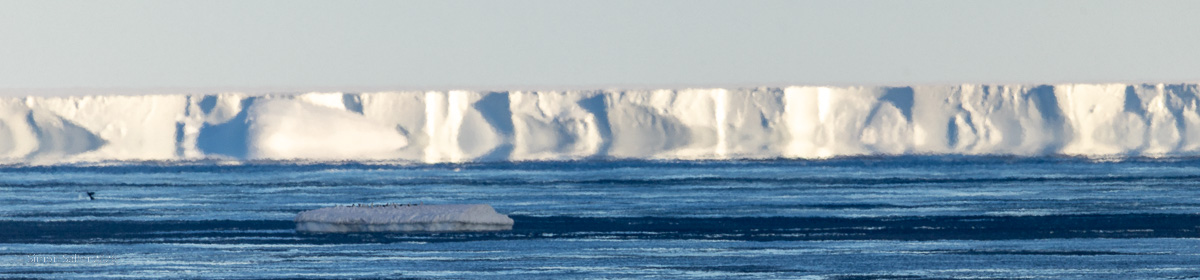
The western end of the Ross Ice Shelf is pinned in place by Ross Island. Cape Rozier is last bit of land before the long, long ice cliffs. 800 km of steep, high, white ice. We got there in the morning and went out in the zodiacs.
It felt chilly. A few degrees below zero augmented by a stiff breeze. We set off along the shore where there are large colonies of Adélie and Emperor penguins. As it was elsewhere, nobody was home. There were a few stragglers standing around but mostly just empty, dark volcanic beaches covered with a thick layer of lighter coloured guano.


The cape was discovered in 1841 by James Clark Ross’s polar expedition. It was named after Commander Francis Crozier, captain of HMS Terror. Four years later, Crozier with Terror and HMS Erebus, Ross’s other Antarctic ship, attempted the Northwest Passage at the other end of the planet. We encountered these sturdy, historic ships, or at least the site of their wrecks, about 18 months ago.
At the end of the beach was an interesting little cove made by the shelf ice. I was fascinated by some icicles with balls. Thin, icy columns cause by melt water had grown down from the ice until they touched water. Then the freezing sea water accumulated on the end like a little frosty bauble. This made some gloriously intricate and delicate patterns along the bottom edge of the ice cliffs.


Just around the corner was yet another phenomenon I had never seen before. Great plumes of spray jetting out of the top of the ice cliffs. You see this sort of thing occasionally in stone sea cliffs. A cave close to sea level has an outlet to the surface. When a wave washes into the cave, water gets pushed up and sprays out above the cliff. I think something similar was happening here albeit in a much more dynamic way. Sea water was forcing open a crack in the ice. The crack would originally have been a crevasse. Some combination of melting and re-freezing was causing spectacular blow holes to appear in one section of cliff. There was something like half a dozen of them in just a short section. A first glance they looked like whales blowing but obviously there were no whales on top of the cliffs.
Ice was accumulating on the rubber boat and on my hands. In the second hour of sitting in the boat ,without really moving at all, bits of me were starting to go numb. I think everyone got a touch hypothermic by the end of the trip. It was, however, spectacular and well worth getting out of bed for.


