
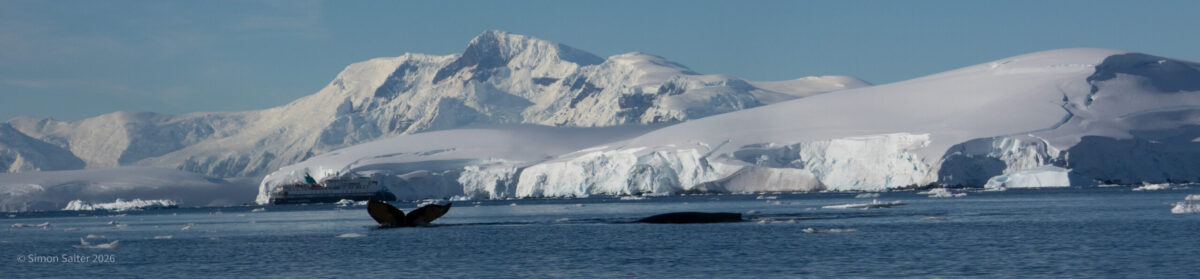
100 km or so south from Cape Adare is Cape Hallett. It is a very picturesque area dominated by the Admiralty Mountain Range. The mountains were discovered in January 1841 by Captain James Clark Ross, Royal Navy, who named them for the Lords Commissioners of the British Admiralty under whose orders he served. Back then, naming geographic features after your sponsors was a well-established and successful ploy for obtaining further sponsorship.


A large Adélie penguin colony is located on the southern side of Cape Hallett. This is where we went zodiac cruising. Conditions were perfect. Calm water, sunshine, a few icebergs with seals lazing around on them and the distinctive smell of the penguin rookery. As with the other places we have visited, most of the penguins have left now and gone to sea. Just a handful of moulting penguins and a lot of guano to show for it.


We pottered around for the best part of two hours. Looked at some penguins. Looked at some seals. Saw a leopard seal but could not get a good picture of it. Mostly because it was sound asleep and not at all interested in us. We looked at some rocks and listened to someone who knew a bit of geology. That was quite interesting. Volcanic features. We looked at some glaciers. One of the guides started talking nonsense. They do this occasionally. They assume that we, the clients, know absolutely nothing about where we are. So, sometimes, to fill the silence, they start telling us stuff as if they know what they are talking about. It is best just to let them get on with it. They never suspect that, sometimes, old people know things.


Back on the ship there was talk of a weather window. We were heading right down to the bottom of the Ross Sea. This is, traditionally, the most reliable way to get south. Shackleton, Scott and many other heroes came this way to Ross Island. Scott named it after Ross. He did not have to. Ross was dead by then and Scott’s funding came from Royal Geographical Society and the Royal Society. Ross, however, was a pillar of Antarctic exploration and this sort of thing went well with the London based leather armchair explorer societies. Our issue was that Antarctic weather is changeable and occasionally ferocious. To take advantage of the weather window we needed to get on with getting to Ross Island.


The zodiacs were packed back onto the ship and we set a course south. For the whole of the next day, we made good speed. No sea ice, very few icebergs, beautiful sunshine and just a few birds following the ship. The expedition team drummed up a few talks. I got on with this blog. Diane got in some essential sleeping time. At Ross Island things were going to get very busy.